
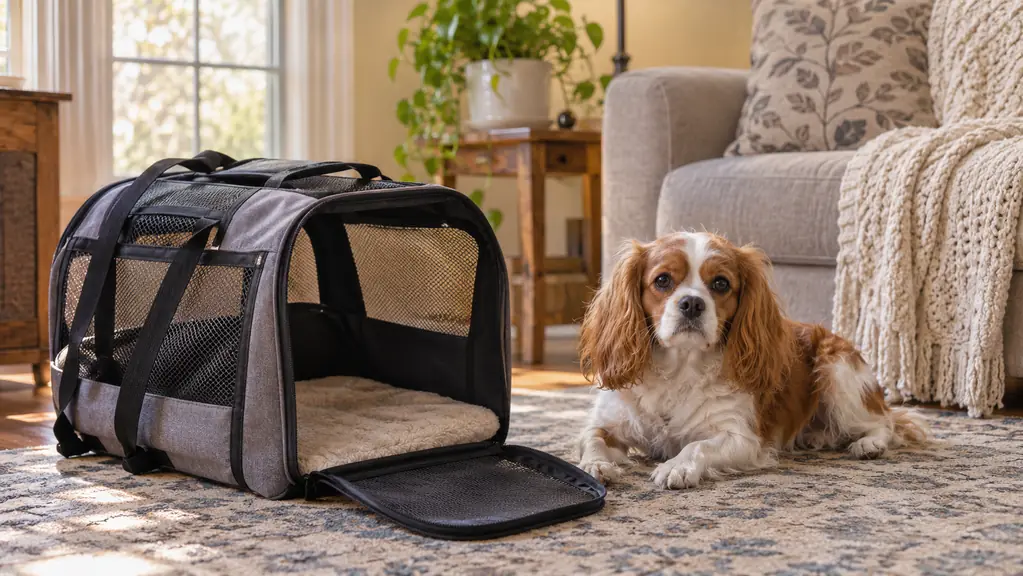
Pico is nine pounds and he shakes for the first ten minutes of every car ride, so the idea of putting him on an airplane made me nervous long before I bought a ticket. The first time I flew up to Sacramento to see my sister Dolores, I spent two weeks reading carrier listings and got more confused with each one. Soft sided or hard sided. Under the seat or in cargo. Dimensions that sound fine until you hold a tape measure against your own dog and start second guessing.
I bought the Sherpa Original Deluxe in the small size fourteen months ago, before that first flight. It has been on three round trips since, plus every vet visit in between, and most of the time it sits on the closet shelf doing nothing. I am not a vet and I am not going to pretend a pet carrier is complicated equipment. But there are a few things about this one I wish somebody had told me at a rest stop instead of me finding out at the gate.
The Quick Verdict
It does the one job that matters on a plane, which is pressing down at the back and sliding under the seat with a nine pound dog inside. The zipper is the part I check every trip.
Amazon Check Today's Price →The bag that has been under three different airplane seats with a nine pound dog inside
Small size, 15 by 10 by 8.5 inches, about a pound, spring wire frame at the rear that pushes down several inches. Sherpa covers it with a one year limited warranty and an on board guarantee. Measure your dog standing before you order.
Amazon Check Today's Price on Amazon →How I've Used It
I bought it well before the flight on purpose. For two weeks I left the Sherpa open on the bedroom floor with one of Pico's blankets inside and never zipped it once. He was sleeping in it by day four. By the time we reached the airport it already smelled like him, and that turned out to be most of the battle. A carrier that smells like a warehouse is a carrier a nervous Chihuahua will fight you over in front of a gate agent.
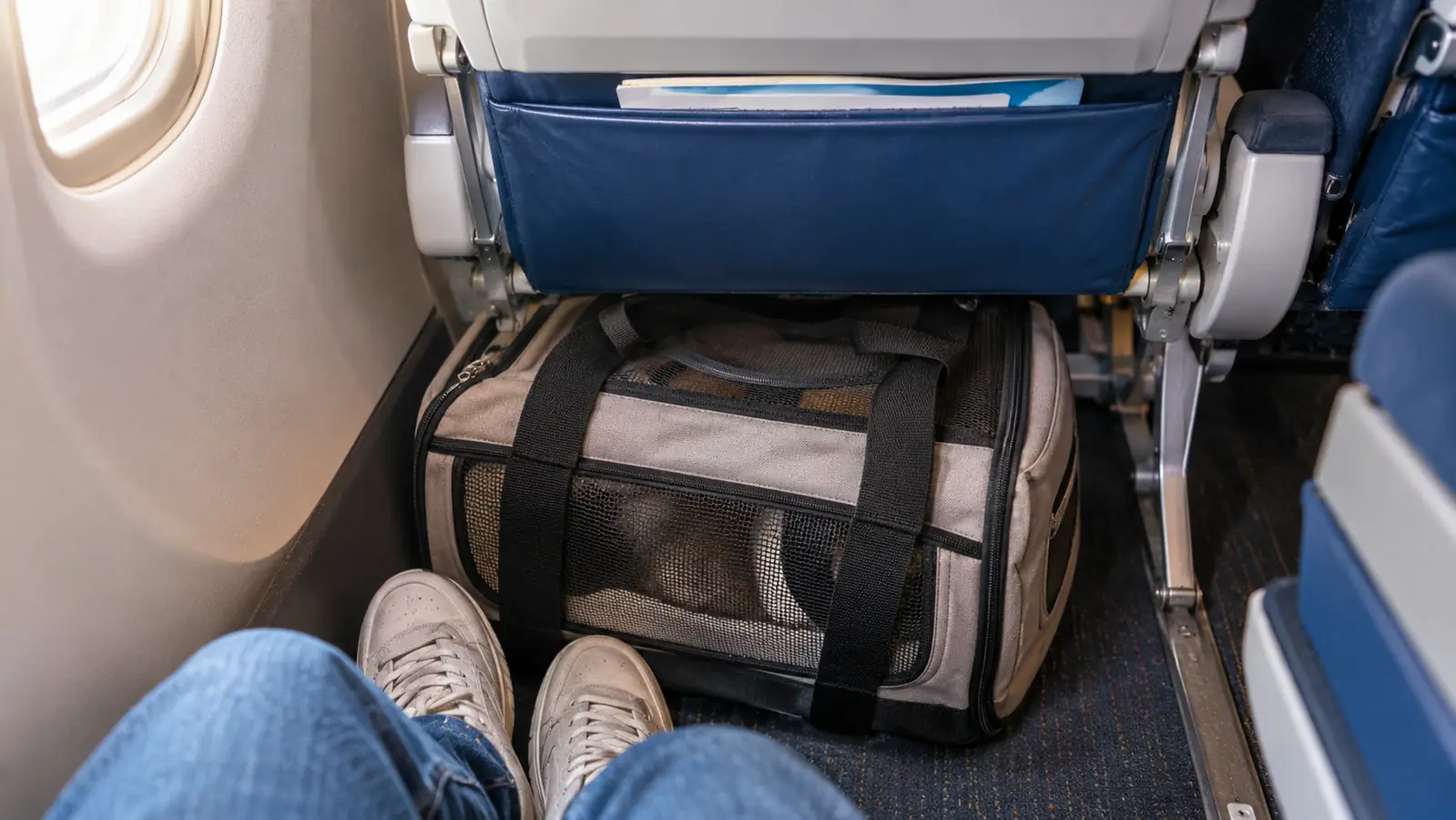
On the plane it goes under the seat in front of me. That is the entire reason I picked this one over something with more structure. Most of my flights out of Tucson are on regional jets, and the space under those seats is not generous. The back of the carrier presses down and the front stays up, so Pico has somewhere to lie down and I still have room to put my feet.
The first flight was the real test. We boarded, I slid the bag under the seat in front of me, and Pico went quiet about twenty minutes in. He slept through the descent. I have never been so relieved to be ignored by an animal.
At home it is a vet visit bag and nothing else. It lives on the closet shelf between trips. I have never used it as a car restraint and I would not, because a soft bag is not a car seat no matter what the listing photos imply. Pico rides in the back of the Forester in his booster seat with a tether on his harness. The Sherpa only comes out for planes and for the vet.
What the Spring Wire Frame Does Under a Seat
The frame at the rear is spring wire, and it pushes down several inches without the rest of the bag collapsing. In a product description that reads like a small detail. On a regional jet it is the difference between fitting and not fitting, and it is why I stopped shopping.
The first time I pushed it down I was fairly sure I was breaking it. It gave, then held, and Pico, who was already inside, did not seem to notice. After we landed it went back into shape on its own. Fourteen months later it still does that, which is more than I can say for the folding laundry basket I bought the same spring.
One thing worth doing before you fly is checking the space under your seat ahead of time. I measured our own couch cushion gap with a carry on bag the week before the first trip, which sounds ridiculous and helped. The frame gives you several inches of give at the back. It does not make the bag any shorter than 15 inches front to back.
What it does not do is stay rigid. Set the carrier down at the gate with a dog inside and no hand on the handle, and the whole thing leans. On the plane that is a non issue because it is wedged under a seat. In a terminal it means one hand stays on the padded top handle while the other one digs for a boarding pass.
The Size Numbers, and Whether Your Dog Fits
The small measures 15 inches long, 10 inches wide and 8.5 inches high, and it weighs about a pound. Pico is nine pounds and he fits with room to turn around, which is the only test that matters. He cannot stand up all the way and he cannot stretch out flat. On a two hour flight that is the trade you make for a bag that goes under a seat.
If your dog is much past twelve or thirteen pounds, read the numbers twice before you order. A dog who has to be folded in is a dog who will complain for the whole flight, and flight attendants can hear it. Pico measured 13 inches from chest to rump at his last checkup, which leaves a couple of inches of slack at the front of the bag. That is about right. Any tighter and I would have sized up.
Height is the number people forget. Eight and a half inches sounds generous until you have a dog with a long back or a thick neck. Measure your dog standing, then add an inch for turning around. If you land above the listed height, size up and check your airline's rules rather than hoping nobody notices at the gate.
Fourteen Months In: Zipper, Liner, and Handle
The zipper is the part I watch. It runs around the top and down one side, and it has held through three round trips, a dozen vet visits and one unfortunate morning involving a dropped bag of treats in a rental car. The pulls still work and the teeth have not separated. I check them before every flight, because a carrier that opens in a terminal is a bad afternoon for everyone involved.
The liner that came with it is thin and machine washable, and I wash it after every trip. It has been through the machine a dozen times without tearing, though it has faded. The floor of the bag has stayed flat, which matters because Pico will not lie down on anything lumpy. He will sit and stare at me instead, loudly.
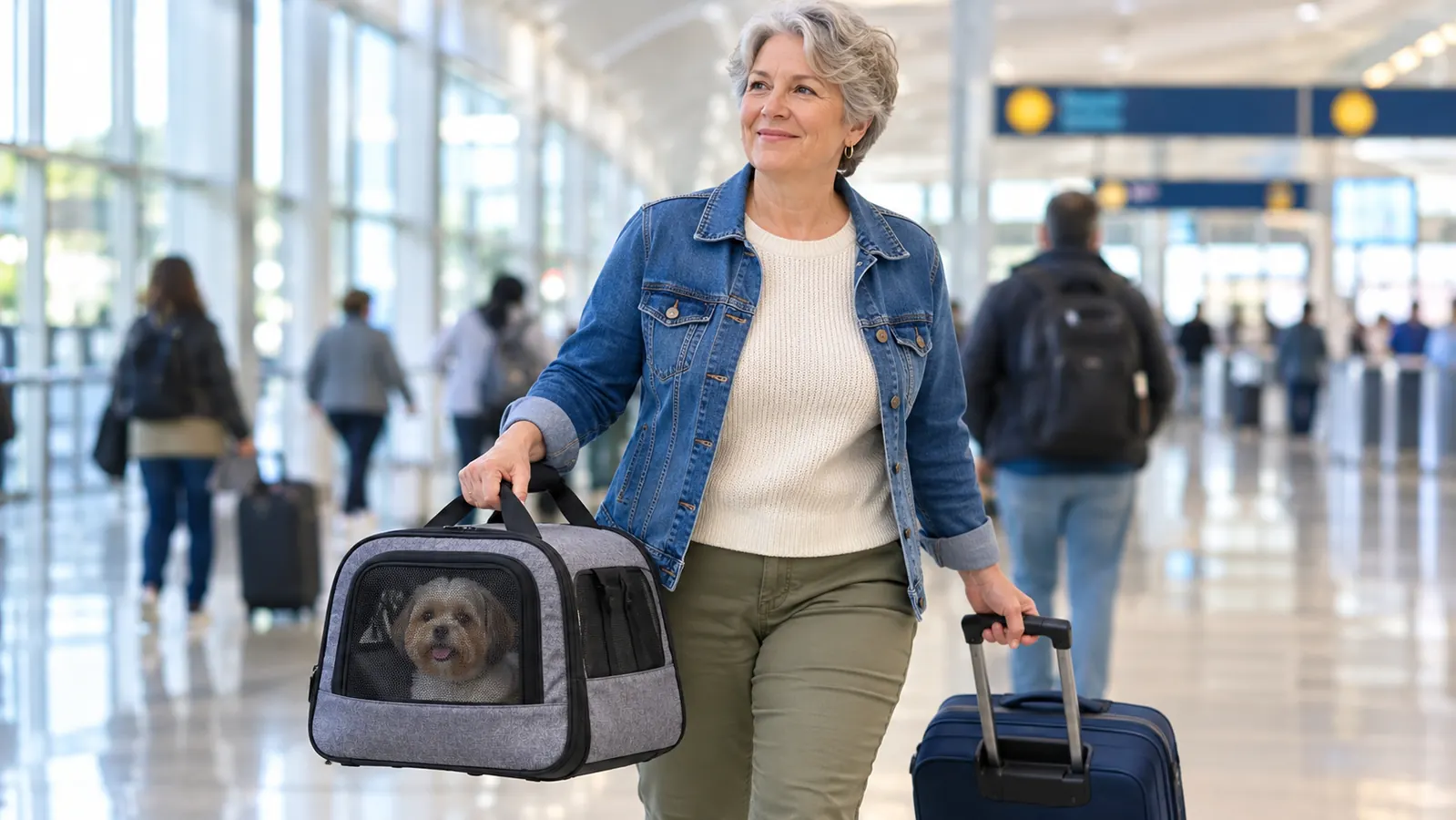
The padded top handle is what I use. I carry the carrier by hand through the terminal with Pico inside and my other hand free, and the handle does not cut into my fingers even after a long walk to a far gate. The detachable shoulder strap lives in the side pocket. I tried it once, did not like how the bag swung against my hip with a dog in it, and it has stayed in the pocket since.
Security, the Gate, and the Parts Nobody Warns You About
At security you take the dog out and carry him through the metal detector while the carrier goes on the belt. Pico hates this part and I do not blame him. The bag comes out the other side flat and slightly crumpled, and getting a shaken nine pound dog back into it while people line up behind you is the least dignified five minutes of any trip. A small blanket that smells like home helps. So does going through with the collar and leash already on him, so you have something to hold.
At the gate, the padded top handle is what saves you, because you will stand in line holding the bag with a dog inside for longer than you expect. Asking to board early is worth it when the airline allows it. This is not about status. It is about getting the carrier under the seat before the row in front of you fills up with backpacks.
The Guarantee, and What It Does Not Cover
Sherpa calls this carrier airline approved and guarantees it on board, and the small size has been fine on every flight I have taken it on. That guarantee does not override your airline's own rules. I check the pet policy page before every booking, and I have twice seen a carrier that was fine on one airline be too tall for another one's under seat space. The guarantee is worth having because it exists, but the number on your airline's page is the one that decides whether you board.
There is a one year limited warranty on the carrier. I have not needed it. Fourteen months in, nothing has failed, so I have no story about a replacement that arrived or did not.
Soft Bag or Hard Kennel
If you are weighing this against a hard sided kennel, the honest answer is that they do different jobs. A hard kennel holds its shape, protects a dog from being stepped on at a crowded gate, and sits flat on the floor of a rental car. It is also heavier and it is not going under a regional jet seat no matter how you angle it. I go through the longer version of that comparison in the piece on soft carriers versus hard sided kennels here.
I picked the soft bag because flying is the hard part for us. If we drove everywhere instead, I would probably own a hard kennel and never think about it again. The Sherpa is a bag that solves one specific problem well and is merely fine at everything else.
There is also the storage question nobody mentions. A hard kennel takes up half a shelf in the garage. This one folds down, sits on the closet shelf next to my sweaters, and I forget it is there until the next trip.
What I Liked
- Spring wire frame pushes down at the rear so the bag fits under a regional jet seat
- 15 by 10 by 8.5 inches and about a pound, so carrying it by the padded top handle through a terminal is easy on the arm
- Zipper and liner have held through three round trips and a dozen vet visits
- Machine washable liner, which matters more than it sounds with an anxious dog
Where It Falls Short
- No structure, so it leans over when you set it down unsupported
- The small size leaves a dog past about thirteen pounds folded in
- You still have to check each airline's under seat numbers yourself
- The shoulder strap was not useful for a nine pound dog, at least not for me
The back of the carrier presses down and the front stays up, so Pico has somewhere to lie down and I still have room to put my feet.
Who This Is For
Owners of dogs under about twelve pounds who fly a few times a year and want a bag that goes under the seat without a scene. It suits a dog who is already comfortable in a crate, or one who will tolerate a bag left open on the floor for a week beforehand. It also suits anyone who has been told at a gate that their carrier is too tall, because the spring wire frame gives you a few more inches to work with.
If you want one bag that covers flights and vet visits and lives on a shelf the rest of the year, this is a reasonable thing to own. The liner washes, the zipper holds, the handle is comfortable, and the whole thing weighs about a pound when it is empty.
It also works as a soft sided crate for ordinary outings, which the listing mentions and which matches how I use it. Vet visits, the groomer, a friend's kitchen. It has held up fine for all of that.
Who Should Skip It
If your dog is over about thirteen pounds, or has a long back, or is too old to fold into a low space, skip it and look at a larger size or a different design. A dog who cannot turn around will tell the whole cabin about it.
If you want a rigid carrier that stands up by itself at the gate, or something you can strap into a car seat, this is not that product. A soft carrier is a travel bag. Treat it as one.
And if the main thing you need is a way to keep a dog in place in the back seat of a car, keep looking. This is not a restraint system and it was never meant to be one.
The one I keep reaching for, three round trips in
Small size, 15 by 10 by 8.5 inches, about a pound, spring wire frame at the rear, machine washable liner, one year limited warranty. Measure your dog standing and check your airline's under seat numbers first. Then look at today's price.
Amazon Check Today's Price on Amazon →