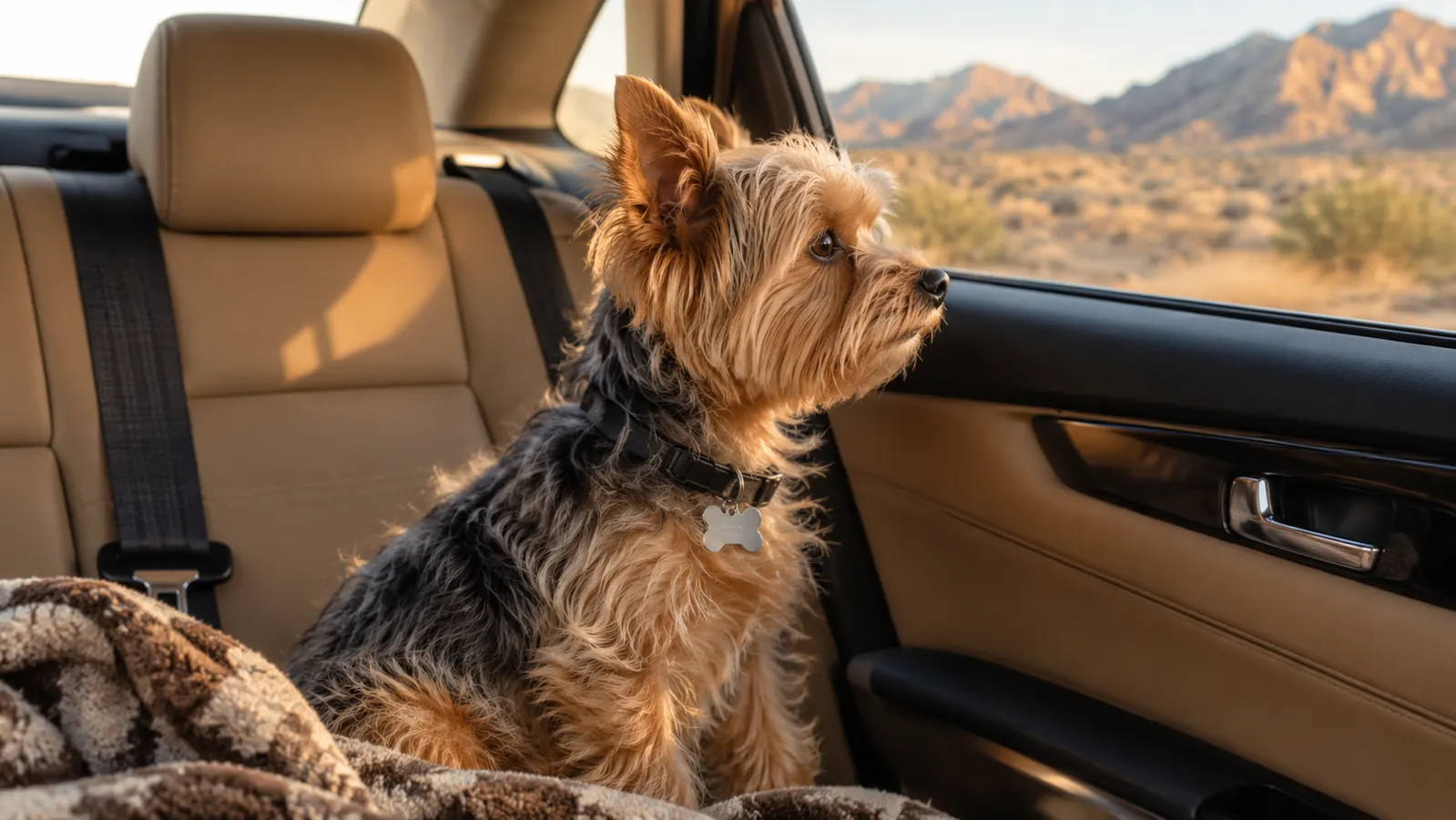
Pico starts shaking before I have backed out of the driveway. Not when the engine turns over. Not at the first speed bump. Somewhere in the ten seconds between me pulling the driver door shut and shifting into reverse, a nine-pound Chihuahua mix turns into a small vibrating stone on the back seat of my 2019 Subaru Forester. He is eight years old. He has never once been a relaxed passenger.
I am not a trainer and I am not a vet. I am a retired dental office manager in Tucson who spends about a third of the year on the road with a dog who would rather stay home, and I spent two years trying to make the car less frightening for him. Folded towels stacked on the seat. A laundry basket wedged behind the passenger side. A soft carrier he climbed out of at a red light on Speedway. None of it worked, because none of it solved the actual problem, which was that Pico could not see out of the window. The thing that changed the drive was the JOEJOY Deluxe Dog Booster Seat. It has been buckled into my rear passenger-side seat for ten months now, on every road trip, and it is the only piece of gear I would buy again without thinking about it.
Nine Inches Up, and the Back Seat Goes Quiet
The JOEJOY booster seat straps to a rear seat with two adjustable straps and lifts a small dog to window height. Ten months of desert highway and it still holds its shape.
Amazon Check Today's Price on Amazon →Step 1: Put the Seat in the Car Before You Put the Dog in the Seat
Unbox it, wipe the Oxford cloth down with a damp rag, and set it in the car while the car is parked. Not on the way somewhere. Parked, in the driveway, engine off, doors open. That sounds like nothing. It is half the job. Mine went onto the rear passenger-side seat and stayed there. I laid one of my worn t-shirts across the cushion because it already smelled like the house, and I left the seat out where Pico could walk past it, sniff the storage pockets, and decide on his own that it was furniture and not a trap. It took about three days before he climbed in without being asked.
Do not rush that part. A dog who gets lifted into a strange box and immediately driven to the vet learns exactly one thing about the box, and it is not a good thing. If your dog is more suspicious than mine, set the seat on the living room floor for a week like it is just another object in his world, then move it out to the car. Pico is a dog who shies at new things, and three days of ignoring it in the driveway did more than a month of coaxing would have.
Step 2: Buckle It In and Set the Leash Short
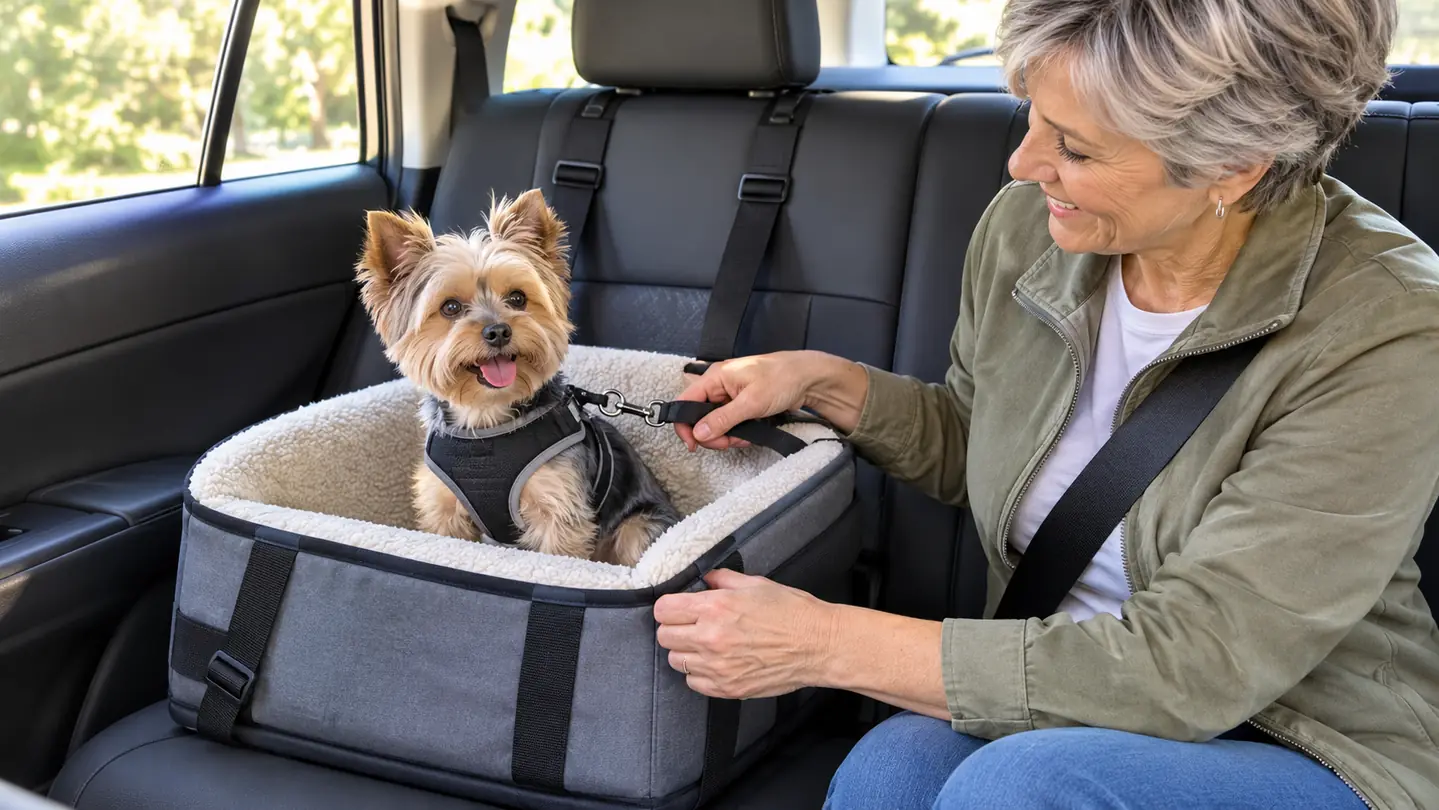
The JOEJOY has two adjustable straps that run from the seat and wrap around the back seat. Pull them snug. Not tight enough to flatten the cushion, tight enough that the whole seat does not shift when you take a corner. The seat weighs a little over three pounds, so it is not going to anchor itself, and a booster that slides is worse than no booster at all. Inside there is a safety leash, and this is the part people get wrong. Clip it to the back ring of a padded harness. Never to a collar. A collar clip on a hard stop is a neck injury waiting to happen, and it takes about one emergency brake to find that out the hard way.
I keep Pico's leash short enough that he can stand, turn around, and lie down, but not long enough to get a paw on the door panel or slide off onto the floor. That length has held for ten months. The COOYOO tether in my door pocket is for the days the booster is out of the car being wiped down, and for my sister's car in Sacramento. Pico never uses both at once. When he is in the booster, the booster's own leash is the one doing the work.
Step 3: Drive Five Minutes and Go Home
The first drive should not be to the park. I made that mistake in year one and it taught Pico that the car was the hallway to something good, which meant every drive that did not end at the park was a disappointment he expressed by shaking. Five minutes. Around the block. Home. Praise, a treat, back inside. Do that for three or four days. Then ten minutes. Then an actual errand, the pharmacy drive-through, the bank, the post office. The goal is to make the car boring and the return home reliable.
The shaking did not stop on day one. What changed was the duration. Before the booster, Pico shook for a solid half hour, and on highway days it was longer than that. In the first week with the seat, he settled in about ten minutes. Ten months in, it is usually under five, and on a good morning he is asleep before we reach the on-ramp. He still does not love the car. There is a difference between a dog who loves the car and a dog who is not afraid of it, and we live in the second one. For a nine-pound animal, that is the whole ballgame.
The first long trip should be one you can cut short. Ours was Tucson to Lordsburg, about two and a half hours, and we stopped twice. Both stops were a walk around the car and a drink of water, five minutes each. He did not sleep on that drive. He watched. But he was not shaking after the first twenty minutes, and that was a win big enough that I wrote it down in the little notebook I keep in the glove box, next to the registration.
Before the booster he shook for a solid half hour. The first week with it, he settled in ten minutes. Nothing about him changed. He could just finally see out the window.
Step 4: Give Him the View and Then Leave Him Alone
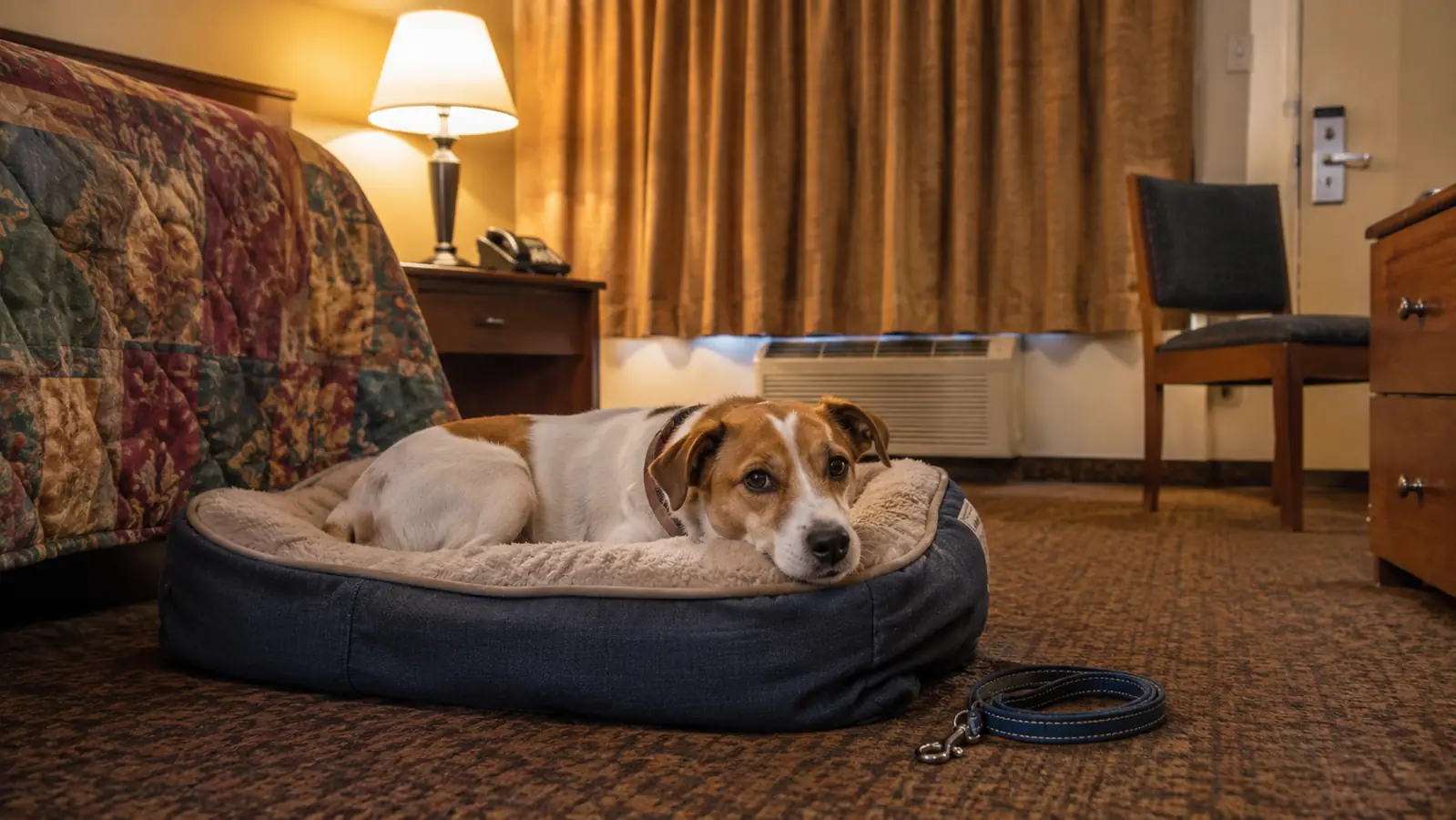
Nine inches of height is the mechanical trick, and it only works if the dog gets to use it. Do not drape a blanket over the seat back. Do not hang a shade so heavy that the rear glass goes dark. Pico needs the side window and the rear window both, and he spends most of a drive rotating between them like a small sentry. The other thing I had to learn was to stop talking. I used to lean over at every red light and say oh buddy, it is okay, in that high worried voice, and all that did was confirm for him that there was something to be worried about. Now I say hello once at the start, then I shut up and drive.
Keep the radio low. Crack a rear window an inch at low speed, and use the vents once you are on the highway. The back seat of a Forester in July is a greenhouse, and a hot dog is an anxious dog. If the forecast is over about 85 degrees, we take the long trip at six in the morning or we do not take it at all.
Watch the posture, too. A dog bracing himself against the seat back with both hind legs is not relaxed, no matter how good the seat is. When Pico finally lay down instead of standing with his feet splayed and his ears back, I knew the height had done its job. If your dog stands the entire trip, the seat may be sitting too low, the view may be blocked by something behind you, or he may simply need a few more short drives before he trusts it.
Step 5: Fix the Rest of the Trip, Not Just the Ride
Calming the ride is half the job. The other half is everything that happens when the wheels stop. Pico does not get a real meal in the two hours before we leave. A couple of pieces of kibble, that is it. A full stomach plus a desert highway plus a small dog is a combination I have cleaned up exactly once and will not repeat. Water is the Cibaabo bottle in the Forester's cup holder, the 300 ml size, with the bowl part he drinks from and the little container of kibble clipped to it. He figured out the bowl on the second day of our first trip. At rest stops I offer it before we walk, not after, because after a walk he is too busy panting to drink anything.
Fit matters more than people expect. Run two fingers under the harness strap before you buckle anything, the same way you would check a collar. If the leash on the booster pulls the harness sideways when the car turns, it is too long. If Pico cannot lie down flat, it is too short. That adjustment took me three tries on the first afternoon and I have not touched it since.
The motel room is its own adjustment. The Furhaven travel bed comes out of its stuff sack in the cargo area and goes on the floor beside my bed, and he settles on it because it already smells like the living room. Three motels into the routine he walks in, finds the bed, and lies down. Same dog who used to pace a motel room until midnight. None of that is about the booster seat, and all of it is about the trip. A dog who is wound up at every stop is a dog who starts the next drive already behind.
What Else Helps
Two honest notes about the seat. It measures 16 by 13 by 9 inches and it is rated for pets up to 20 pounds. Pico at nine pounds has room to sprawl. A 20-pound dog will fill it completely. If your dog is 25 pounds and long-legged, this is not the seat for you no matter how you adjust the straps, and I would rather tell you that now than have you find out in a parking lot. The frame is a collapsible metal frame, so the seat holds its shape when a dog steps on the edge climbing in, and it folds down when you want to move it to another vehicle. I move mine into my sister's back seat once a year in Sacramento. Thirty seconds and no tools. The outside storage pockets hold a leash, a bag of treats, and a folded towel, and the Oxford cloth wipes clean with a damp cloth, which matters more than it sounds the first time your dog gets carsick on I-10.
Beyond the seat, the two things that moved the needle for us were a padded harness for the leash to clip to and a routine that does not change. Same departure order, same voice, same short leash length. Dogs read patterns, and a pattern that repeats is a pattern they can predict, and a predictable car ride is a car ride that stops being scary.
There is also a version of this trip where the booster is not the main tool. On the two flights a year to Sacramento, none of it applies, because the Sherpa carrier goes under the seat in front of me and the booster stays in the Forester. In the car, the booster is the whole setup. I have never used the Sherpa as a car restraint and I would not.
If your dog's car anxiety is severe, meaning he drools until he is soaked, vomits on every trip, or hurts himself trying to get to the floor, that is a conversation for your vet and not a shopping decision. I would have that conversation before I bought anything. What I can tell you is what happened in my own car: a nine-pound dog who spent two years hating the back seat now rides six hours at a stretch and hops out wagging.
If He Shakes Before You Reach the End of the Driveway, Start Here
Pico is nine pounds and eight years old. This is the seat that took his car ride from half an hour of shaking down to five minutes of looking out the window. Today's price is on the listing.
Amazon Check Today's Price on Amazon →