The honest version of this review starts with a confession. I did not buy the JOEJOY booster seat because of the metal frame or the storage pockets. I bought it because my dog would not stop shaking, and I had run out of things to try.
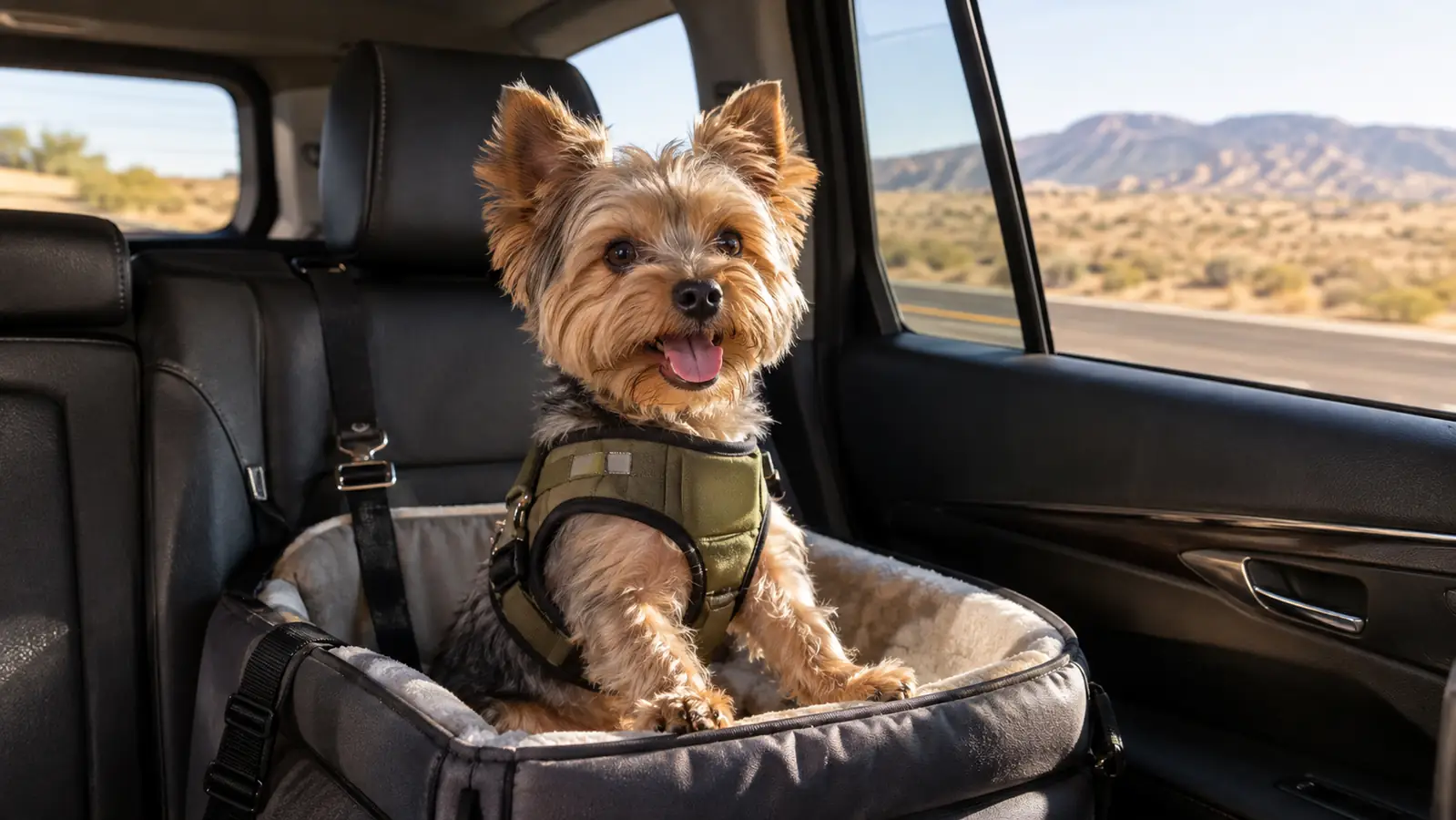
Pico is an eight-year-old Chihuahua mix, nine pounds on a wet day. He is calm at home and calm at the vet. Put him on the back seat of my 2019 Subaru Forester, turn the key, and for the first half hour of every drive he trembled like a washing machine off balance. A blanket did not help. A flat bed did not help. A towel over the seat did not help. What finally helped was nine inches of height and a window at eye level.
That is what a booster seat actually does, and it is worth saying plainly before anything else: it lifts the dog so he can see. The JOEJOY seat does that with a collapsible metal frame inside an Oxford cloth shell. It measures 16 by 13 by 9 inches and weighs 3.11 pounds empty. I have had mine for ten months. It lives on the rear passenger-side seat of the Forester, strapped in with its own adjustable straps, and it comes out only to be wiped down. Here is what I would tell a friend at a rest stop, including the parts I do not love.
The Quick Verdict
Lifts a nine-pound dog to window height and holds him there without sagging after ten months. The straps take fiddling, and it is a container, not a crash-rated restraint.
Amazon Check Today's Price →If your dog shakes for the first ten minutes of every drive, start here
The JOEJOY booster seat is what cut Pico's settle-in time from half an hour to about ten minutes. Check today's price and confirm the size against your dog's weight before you order.
Amazon Check Today's Price on Amazon →What the Listing Does Not Tell You
The product page will tell you it fits small dogs up to 20 pounds. It will not tell you what 20 pounds actually feels like inside a seat this size. Sixteen inches long and thirteen wide is generous for a nine-pound dog and snug for a long-backed one at the top of the range. Pico has room to turn around, lie down, and stand up to look out the window. A fifteen-pound dog with a long body would fill the footprint and have his shoulders pressed against the sides. If your dog is anywhere near the limit, measure him from chest to tail base and compare that to sixteen inches before you decide anything.
Before I ordered this one I spent a Saturday afternoon in a Tucson pet store pressing my thumbs into the sides of the foam booster seats on the shelf. Four of them, different brands, all in the same size range. Every one of them gave. Not a lot, but enough that I could feel the wall flex inward toward the middle, and I kept thinking about nine pounds of dog leaning against that wall for two hours on the highway. That is the reason I paid attention to the words metal frame in the listing. It is also the reason I would tell anyone comparing these seats to do the same thing in the store: put a hand on the inside wall and push. If it bows under your thumb, it will bow under your dog.
The second thing the listing does not say out loud is that this is a lift and a container, not a safety device. The seat has two adjustable straps that go around your car's seat back and seat base, plus an internal leash that clips to a harness. That leash is what keeps a dog from climbing out at a stoplight. It is not a crash-tested restraint, and JOEJOY does not claim it is. I want that stated clearly, because booster seats as a category get talked about as though they protect a dog in a collision, and most of them do not.
Third, the material is Oxford cloth and the care instruction is wipe clean. Not machine washable. That is fine for road dust, motel parking lots and the occasional upset stomach, all of which I have handled with a damp cloth and a drop of dish soap. It is not fine for a dog that gets genuinely carsick. If yours does, plan on a towel underneath and a cover you can pull off.
How I Have Actually Used It
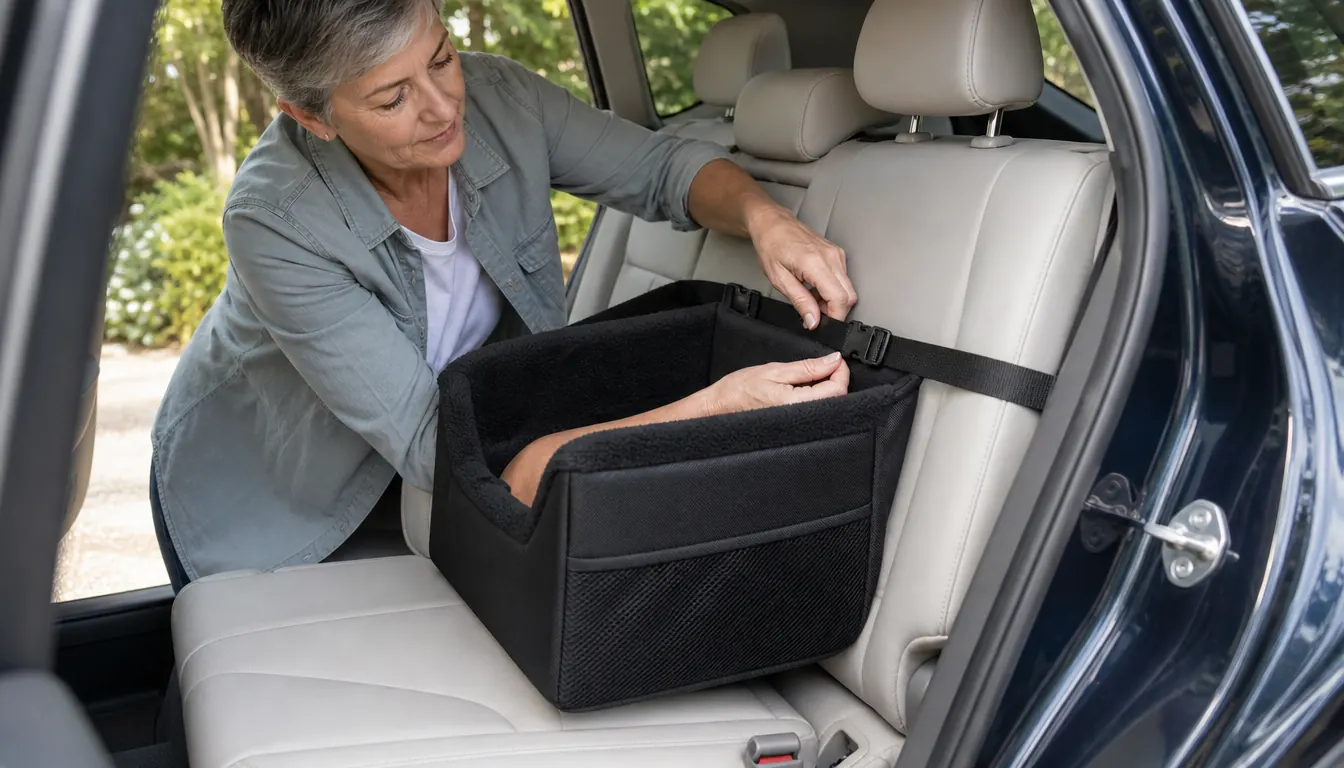
Ten months, mostly road trips out of Tucson, up through New Mexico and into Colorado, a lot of motels and state park trailheads. The seat goes in once at the start of a trip and stays in. The first installation took me about ten minutes of fumbling, because the straps run behind the seat back and you have to find the right tension by feel. Now it takes about a minute. One strap around the back of the seat, one around the base, both pulled snug. On leather, the strap can creep a little loose over a few weeks, so I check it whenever I vacuum the car.
The first real test was a Sunday drive up Mount Lemmon, which is about an hour of switchbacks from the valley floor. I installed the seat the night before in the driveway and then made myself leave it alone. Pico climbed in on his own after I dropped a piece of kibble on the cushion. He stood for the first two corners, sat for the next three, and by the time we passed the ski area turnoff he was lying down with his chin on the front edge, watching the trees go by. That was the first drive in months where he did not shake at all. The seat had been in the car six days at that point.
Pico wears a padded harness and the internal leash clips to the ring on the back, never to a collar. That is not a small detail. A dog who stands up suddenly at a red light puts his whole weight on that clip, and a collar is the wrong place to hang it. When he is in the booster, the seat's own leash is what holds him and my seat belt tether stays in the door pocket. I do not use both at once. One or the other, every time.
On the two flights a year to see my sister in Sacramento, the booster stays home in the car and Pico flies in his carrier. That is a different piece of gear for a different job, and I would not try to make this seat do it. It is not a carrier, it has no top, and there is no way to carry a nine-pound dog through an airport in it.
The Metal Frame Is the Whole Reason to Buy This One
Most booster seats in this range are a foam block with fabric over it. They look fine in a photo and they bow inward after a few months of a dog leaning on the sides. The JOEJOY seat has a collapsible metal frame inside the shell, and that frame is why the walls stay upright. When Pico braces his front paws on the edge to watch the road, the side of the seat does not fold under him. Ten months in, the frame has not bent, the seams have not split, and the shape of the seat is the same as the day I unboxed it.
The cushion has taken the wear instead. It is thick, and it is flatter where he sits than it was in month one. That is normal and it has not changed how the seat works. The two storage pockets on the outside hold a spare leash and a fold of bags, which is about all they will hold without bulging. I would not count them as a reason to buy, but they are handy for exactly that.
What Ten Months of Real Use Looks Like
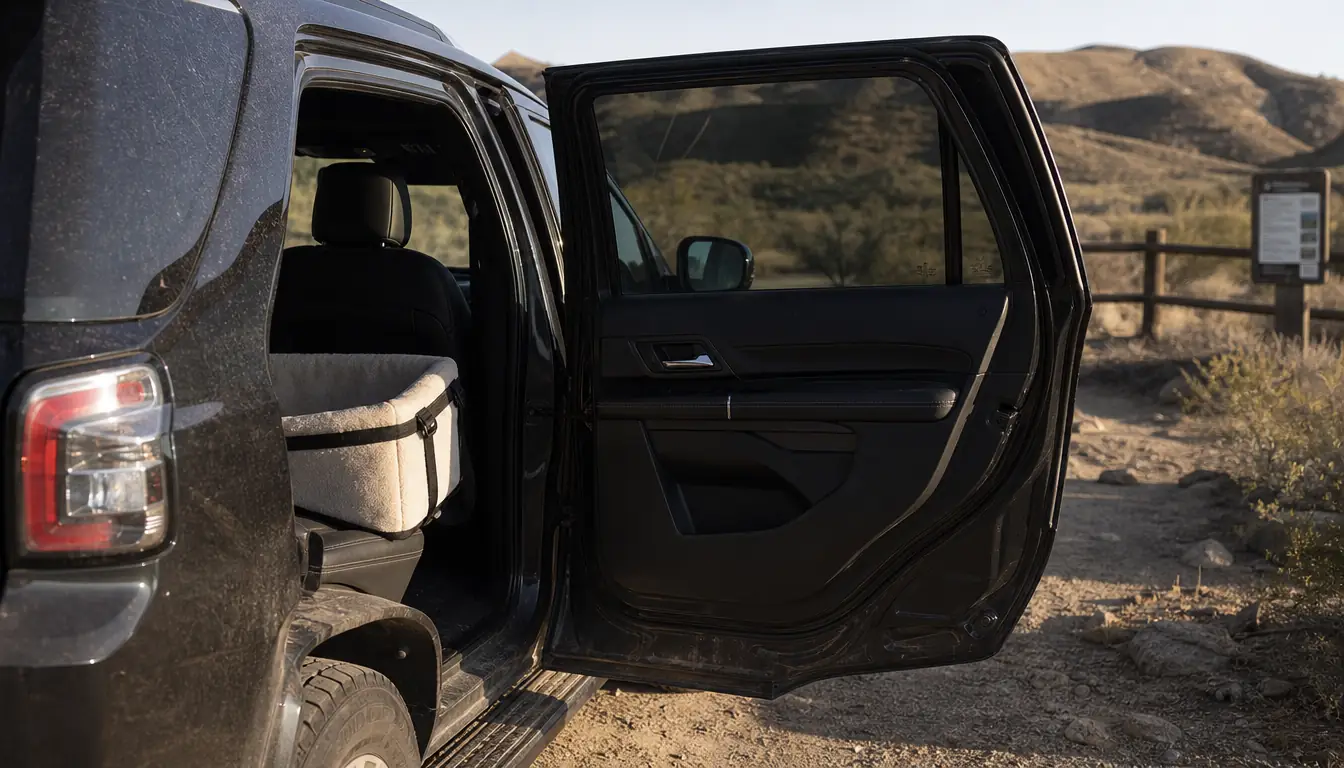
The seat has been through desert dust, a muddy trailhead outside Durango, one motel incident involving a dropped piece of toast, and something close to three thousand miles of highway. The Oxford cloth wipes clean and has not stained. The straps still hold tension. The one chore I stay on top of is that tension, and the one thing I would change is the lack of any rigid connection to the car's seat frame. The seat is held by straps and its own weight. That is how this category works, but it is worth knowing before you buy.
The wipe-down routine is worth spelling out because it is the only maintenance this seat asks of you. Once a week at home, and at the end of every trip, I take the seat out, set it on the driveway, and go over the Oxford cloth with a damp microfiber cloth and a small bowl of warm water with a drop of dish soap in it. The cushion comes out of the frame and gets the same treatment. Twenty minutes in the shade and it is dry. Desert dust comes right off, and the cloth has not gone gray or picked up a smell, which surprised me, because the back seat of a parked car in August in Arizona is not a forgiving place to leave anything.
The other thing nobody mentions is that height changes the dog's experience in both directions. Pico settled faster at window level because he could see where we were going. A more nervous dog can find that extra height exposed and spend the first few drives trying to climb down onto the seat. If your dog burrows under blankets rather than watching out the window, a booster is working against his instincts. Mine is a watcher, so it worked.
What I Liked
- Metal frame keeps its shape, with no sagging sides after ten months
- Nine inches of lift puts a nine-pound dog at window height
- Internal leash clips to a harness and holds a standing dog at a stoplight
- Oxford cloth wipes clean with a damp cloth and does not hold odor
- Straps install in about a minute once you have done it twice
Where It Falls Short
- Not crash tested, and JOEJOY does not claim otherwise
- Strap tension needs rechecking every few weeks on leather seats
- Wipe clean only, not machine washable
- Tight fit for a long-bodied dog near the 20-pound limit
- The cushion flattens where the dog sits
Ten months of a nine-pound dog bracing against the sides, and the frame has not bent once. That is the whole argument for this seat over a foam block.
Where It Falls Short
Two honest complaints. First, the strap design requires attention. The straps are adjustable and they hold, but there is nothing locking them, and on leather they creep. I retighten mine every few weeks, and I shove the seat hard before every long drive to confirm it is still snug. Second, there is no rigid base. The seat sits on the car's cushion the way a laundry basket would, held by straps and gravity. In a hard stop, the dog is held by the internal leash and the seat goes wherever the straps let it go. That is a limitation of every product in this category that does not bolt to the car, and it is why I would never describe this seat as protection in a crash.
Third, small but real: getting a reluctant dog in. The sides are high enough to do their job, which means you are lifting a dog over a wall rather than setting him down in an open bed. Pico got used to it in about a week of short drives with a treat dropped in the seat first. A dog who hates being picked up will take longer, and no amount of good design fixes that.
One note I have to leave blank: the listing says cats and dogs. I have no cat and I am not going to pretend I know how one would take to this. If you are shopping for a cat, that is a question for someone else.
Booster Seat or Seat Belt Tether
I own both, and I use them for different drives. The COOYOO tether clips to Pico's harness and buckles into the rear seat belt. It keeps him on the seat. It does not lift him, and it does not stop him sliding on turns, which for a nine-pound dog on leather is most of the problem. The booster lifts and contains. The tether restrains. On short drives when the booster is out drying after a wipe-down, the tether is what I use, and it does the job. On long drives, the booster is the one that stops the shaking.
Here is the honest split after ten months. Roughly nine drives out of ten, the booster is in the car and Pico is in it. The tether comes out for the short hops around Tucson when the booster is drying on the driveway, and it comes out in my sister's car in Sacramento, where I am not going to install and uninstall a booster seat in a borrowed vehicle. On those drives Pico slides a little on the turns and I can hear him repositioning his feet against the seat. He does not shake, but he does not settle the way he does at window height either, and that difference is the whole reason I keep the booster in the car.
If your only goal is keeping the dog off your lap and out of the front seat, a tether is cheaper and takes up less room in the door pocket. If your goal is a dog who actually settles, the height is the part that matters, and no tether can give you that. I would not buy both on day one. Start with the booster and add the tether if you keep finding yourself on short drives without it.
Who This Is For
This is for the owner of a dog under twenty pounds who rides in the back seat regularly, and who has noticed that the dog is anxious, sliding around, or trying to climb into the front. It is for someone doing road trips with a small dog and wanting him contained, lifted and able to see out without being held on a lap. If you have a nine or ten pound dog and a back seat with a headrest, this seat will fit and it will do the job. In my case it was the fastest fix for shaking that turned out to be about not being able to see.
Who Should Skip It
Skip it if your dog is at or over twenty pounds, or long-bodied enough that sixteen inches leaves no room to lie down. Skip it if you need a crash-tested restraint, because this is not one, and a crate or a properly fitted harness system is the answer there. Skip it if you fly more than you drive, since a carrier is what you need and this is not a carrier. And skip it if your dog is a burrower who wants a cave rather than a window. The seat is well made and it does exactly what it says it does. It is just not the right shape of answer for every dog.
The seat that cut Pico's settle-in time from thirty minutes to ten
Ten months on the back seat of a Forester, wiped down more times than I can count, still holding its shape. Check today's price on Amazon and measure your dog against the sixteen-inch footprint before you order.
Amazon Check Today's Price on Amazon →