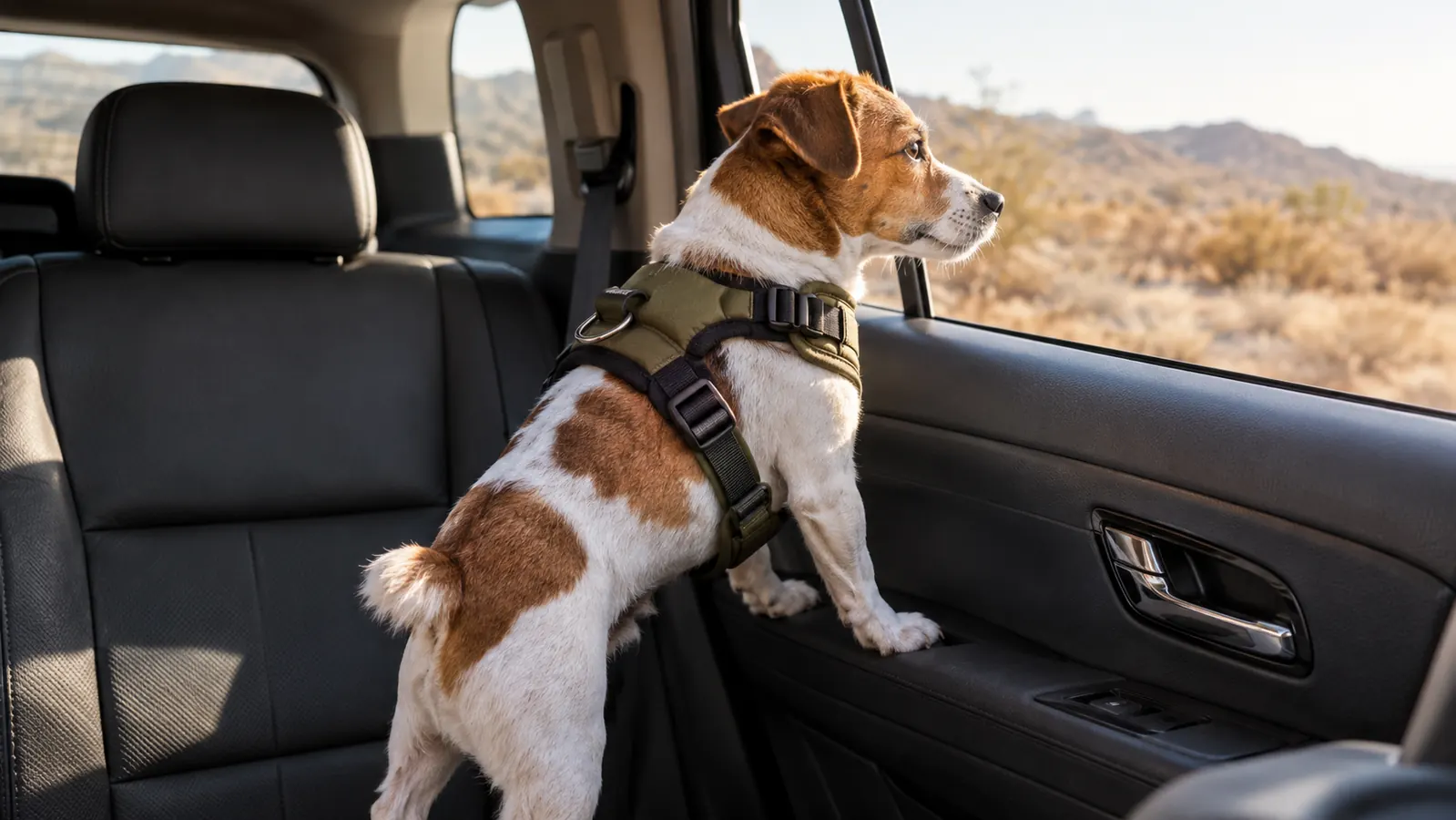
Nine pounds of Chihuahua mix does not stay put. Pico has ridden in the back seat of my Forester since he was a year old, and for most of that time my entire safety setup was a folded towel on the seat and a hand across his chest at red lights. Then I started driving from Tucson up to Colorado twice a year, and a hand stopped looking like a plan. Ten months ago I bought the COOYOO seat belt and started using it on the short drives first. Around the same time I got my hands on a crash-tested car harness with its own tether strap, which is the other thing people mean when they say car harness tether, so I could compare the two with the same dog in the same back seat.
Here is the short answer. For a small dog in an ordinary back seat, the COOYOO seat belt is the piece I actually use, because it goes on in about ten seconds and it works in my car and in my sister's car without a fight. A crash-tested harness with its own tether is the better tool for one specific job, and it is the job that matters most if you spend real time at 70 miles an hour. It is also bulkier on the dog, slower to put on, and sold in pieces. Which one you want depends on where you drive, not on which one is made better.
| COOYOO Seat Belt | Car Harness + Tether | |
|---|---|---|
| Crash protection | Not sold as crash tested. It stops the dog from sliding into the front seat or down onto the floor. | Tested to a published crash standard, with a structure built to take that load. |
| Where the load goes | Through the strap, the clasp and the seat belt buckle. | Through a harness engineered to spread force across the chest and shoulders. |
| Install time | Clip to the harness ring, click the tab into the buckle, slide the strap to length. About ten seconds. | Harness on the dog first, then route the tether to an anchor. More straps, more adjusting. |
| Switching cars | Folds into a door pocket and goes into another sedan in one motion. | Travels with the dog, but the tether has to be re-routed in an unfamiliar car. |
| Room to move | Elastic section lets the dog shift and lie down without a hard yank. | Holds the dog more firmly, which is the point and also less freedom to turn around. |
| Comfort for a small dog | Clips to the back ring of a harness the dog already wears. Nothing new on the body. | A crash-tested harness is bulkier and usually takes a few trips to accept. |
| What comes in the pack | Two tethers and a collapsible silicone bowl, 8.48 ounces for the set. | Harness and tether often sold separately by the same maker. |
| Cost | Costs less than a crash-tested harness and tether bought together. | Costs more, sometimes several times more. |
| Best for | Daily drives, short hops, borrowed cars, small dogs under about 20 pounds. | Long highway miles where you want a tested restraint, not a tether. |
What the COOYOO Seat Belt Actually Is
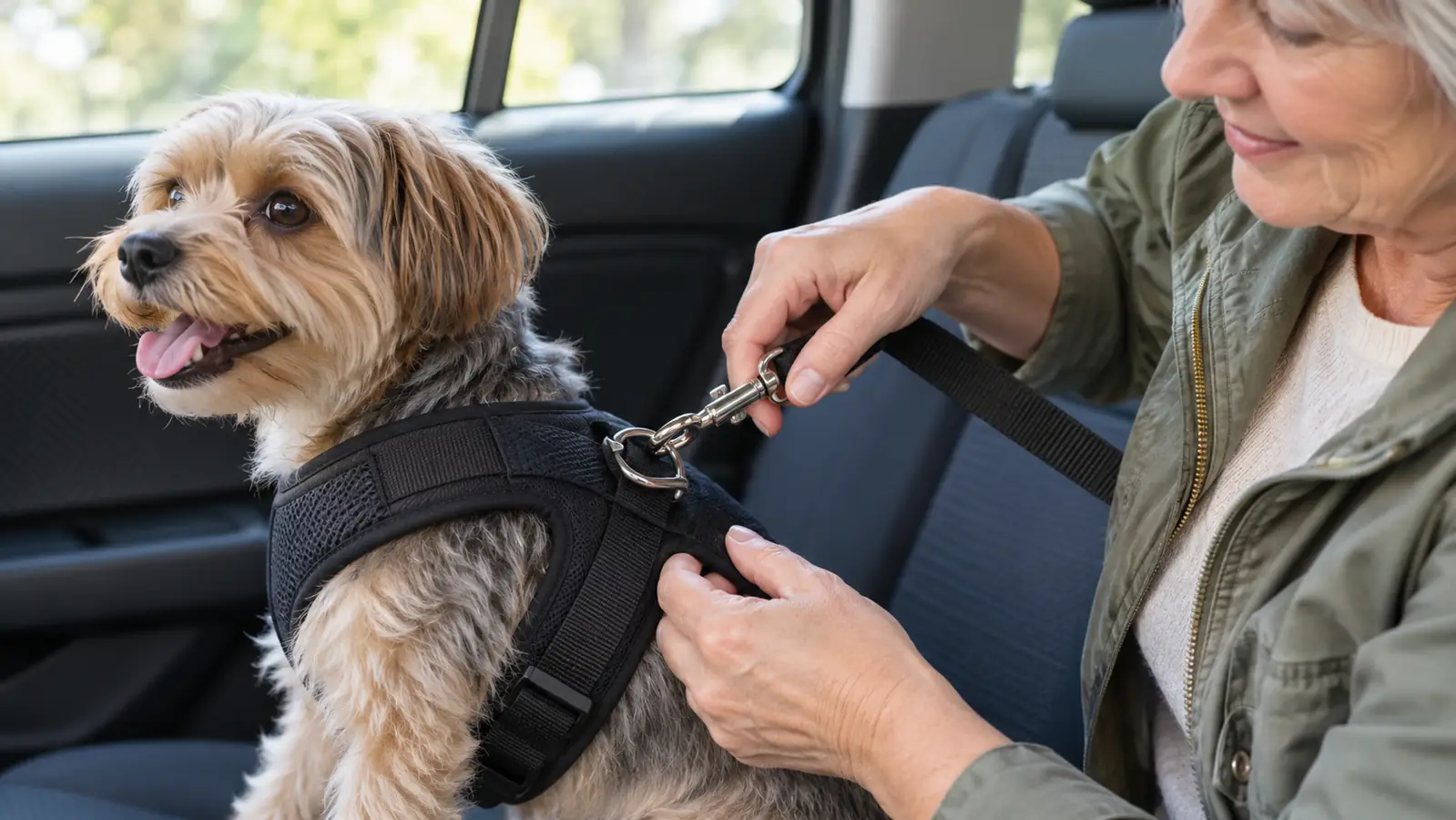
Strip away the packaging and it is a nylon strap with an elastic section, a snap clasp that rotates 360 degrees, and a flat tab at the end that clicks into a seat belt buckle. The tab is 0.79 inches wide. That number is the whole compatibility story, because a buckle that will not accept the tab is the only real fit problem this kind of gear has. The strap adjusts from 24 to 31 inches. My pack came with two of them and a collapsible silicone bowl, and the set weighs 8.48 ounces, so it folds into the door pocket and disappears until I need it.
In the Forester it clicks into the rear seat belt buckle behind the passenger seat and clips to the back ring of Pico's padded harness. I have never clipped it to his collar and I would not. I keep the strap set short, short enough that he can stand up, turn around once, and lie back down, but not long enough to reach the front seat or step down onto the floor. That took me two tries to get right. The first week I had it long, he spent the whole drive leaning against the back of my seat, and I could feel him through the seat back the entire way to Phoenix.
The elastic is the part I did not expect to care about. It gives him a few inches of give when he shifts his weight, so a hard stop does not turn into a yank on his shoulders, and he settles faster than he did with a rigid strap I borrowed first. It is not a shock absorber and I would not describe it as one. It is a little stretch so that a nine pound dog is not fighting a fixed length of webbing every time the car slows down.
Where the COOYOO Seat Belt Wins
It wins on the thing that decides whether safety gear gets used at all, which is friction. Ten seconds to clip and click means I use it for the four minute drive to the pharmacy, not just the long trips. Gear that takes two minutes gets skipped on a Tuesday, and gear that gets skipped is not protecting anybody. The second belt lives in my sister Dolores's sedan in Sacramento, so when I fly up and she picks us up at the airport, I am not improvising with a towel on her back seat.
It also wins on fit, in the narrow sense that matters for a small dog. The strap adjusts down to 24 inches, which is short enough to keep a nine pound dog contained in a back seat, and the rotating clasp means the clip lies flat against the harness ring instead of twisting the webbing. Twisted webbing is what makes a dog fuss. And because it lives in the car rather than on the dog, switching it between the Forester and Dolores's sedan takes one motion. Pico wears his padded harness anyway, so the COOYOO is the only extra step in the routine.
Where a Car Harness Tether Wins
It wins on the one thing the COOYOO cannot claim, which is a crash standard. The COOYOO listing does not say it has been crash tested, and I am not going to pretend otherwise. A harness built and tested to a published crash standard does something different in a real collision. It spreads the load across the dog's chest and shoulders through a structure that was engineered for that job, rather than putting the whole load through a strap and a seat belt buckle. If the worst happens at highway speed, that difference is the entire ballgame.
The harness and tether setup also wins on where the load goes. A tether that runs to a seat anchor, rather than to the buckle your grandfather's lap belt used, is not relying on a component designed to hold a person in an impact and never designed to hold a dog at all. That is an engineering argument, not a brand one, and it is the reason I would not talk a friend out of a crash-tested harness if she does a lot of interstate driving. The trade is real, though. The harness I tried was heavier, harder to get on a wriggling dog, and the tether had to be re-routed every time we changed cars.
The strap that actually gets used on a Tuesday morning
Two tethers, a strap that adjusts from 24 to 31 inches, a 0.79 inch tab built for most buckles, and a collapsible bowl in the same pack. It lives in the door pocket of the Forester and it takes ten seconds to put on.
Amazon Check Today's Price on Amazon →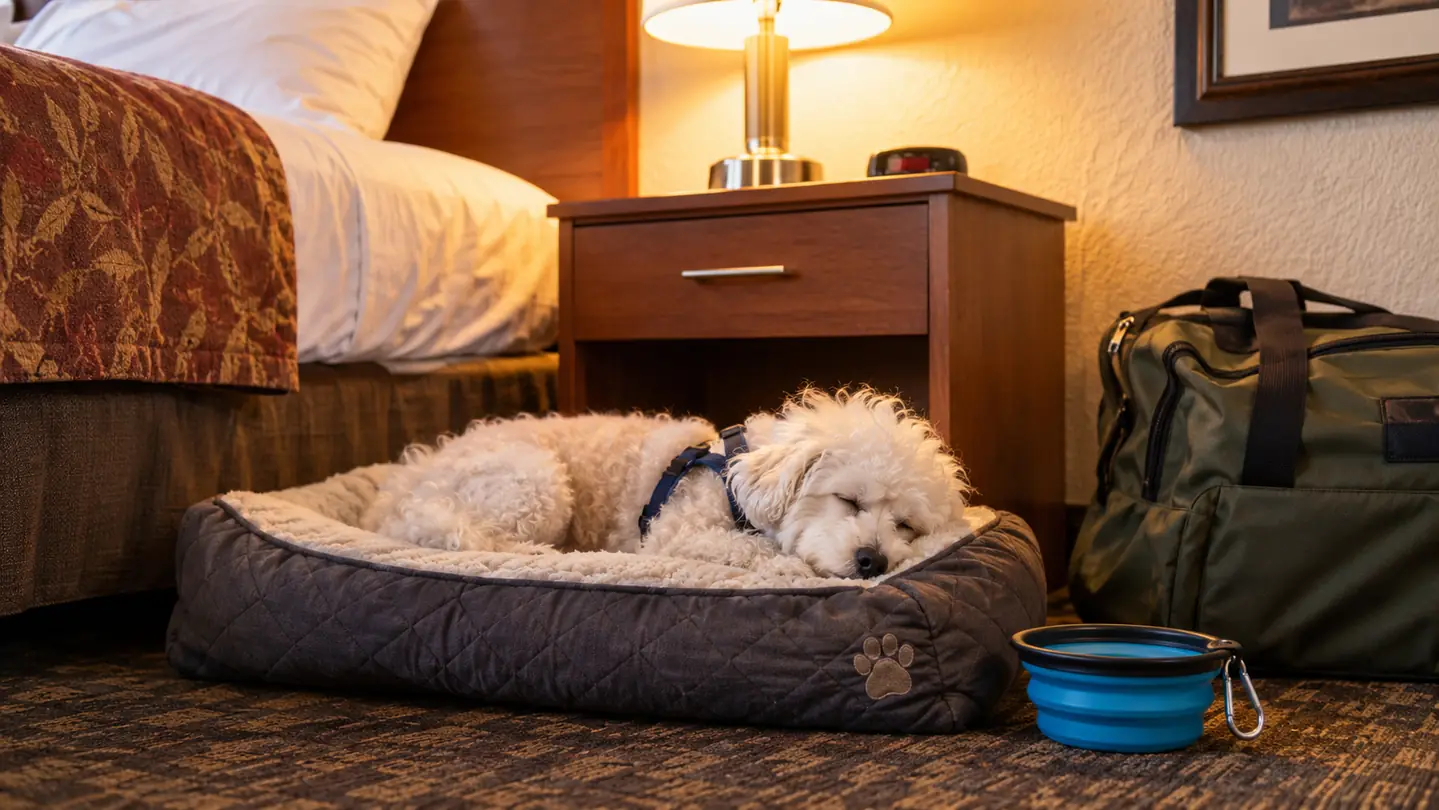
The Buckle Fit Question Nobody Warns You About
Before you buy either one, walk out to your car and look at the buckle. Not the latch, the buckle the tab goes into, and check that it takes a flat tab about 0.79 inches wide. Some back seat buckles sit in a recessed well, some are tucked under a plastic shell, and a few are shaped so that a tab will click but sit at an angle. I got lucky with the Forester and I got lucky again with Dolores's sedan. If your buckle is recessed, clip the COOYOO in before you commit to a routine, because a strap that sits crooked will wear at the webbing over a season of use.
The same check applies at the dog end. The clip goes on the back ring of a harness, and that ring needs to be metal and actually attached to the harness, not a plastic D ring on a step in harness. A nine pound dog will not break a plastic ring on a normal drive and I still would not trust one. Pico's padded harness has a welded ring at the back and the clip sits flat on it. Ten months in, the clasp still snaps with the same click, and the webbing shows no fraying at the point where it bends around the ring.
Ten months, three trips to Sacramento, two drives to Colorado, and the strap has never once come off the harness ring.
One more thing I got wrong at the start. I had the strap long enough that Pico could put a front paw on the console, which felt generous and was actually the whole problem, because he would plant that paw and brace, and a braced dog is a stiff dog. Shortening it solved the bracing and, oddly, the shaking. He still shakes for the first minute when the engine turns over. He just stops sooner. I am not going to tell you a strap fixed his nerves. It gave him less to manage.
What Ten Months of Real Use Looked Like
The gear has been in the door pocket since last spring. It has been used on the four minute drives to the pharmacy, on the two hour run down to Bisbee, and on the long days up through New Mexico where the speed limit is 75 and the wind pushes the Forester around. The webbing has softened but not frayed. The elastic section has not gone slack. The clasp snaps the way it did in week one. The only thing that has changed is the collapsible bowl, which now has a faint ring in the bottom from being filled at rest stops.
What I notice most is what stopped happening. Pico used to slide forward on braking and scramble back up, then spend the next ten minutes panting. With the strap set short he stays put, and he sleeps through the last hour of the drive to Colorado, which he never did before. That is not a safety claim. It is the reason I kept using it, and the reason I stopped looking for an excuse not to.
Who Should Buy Which
Buy the COOYOO seat belt if your dog is under about 20 pounds, you drive a normal car with normal seat belts, and most of your miles are local with a few long trips a year. Buy it if you switch cars, if you fly and get picked up, or if your dog already wears a harness and you want one extra step rather than a whole new rig. Buy it if you have tried a rigid strap and your dog fought it the whole way. It is the version of this gear that gets used every day, and used beats ideal.
Spend the money on a crash-tested harness and tether if you do serious highway mileage with the dog, if you drive at night or in weather, or if your dog is bigger than mine. I would also point you there if you have already had a close call on the interstate. For the rest of us, the honest answer is that a strap that keeps a nine pound dog out of the front seat and off the floor, ten seconds at a time, on every single drive, is doing more work than a perfect harness that stays in the closet because it takes too long to put on.
Start with the ten second version, then decide if you need more
Two tethers and a collapsible bowl. Adjusts from 24 to 31 inches, snaps onto a harness ring, clicks into the buckle behind the back seat. Ten months in the Forester and it is still the first thing I reach for.
Amazon Check Today's Price on Amazon →